Environmental Economics: The Cost of Pollution
- Archisha Verma
- Feb 6, 2025
- 5 min read

Pollution is one of the most urgent global problems of today, having an effect on health, economics, and the environment on the planet. Pollution costs a staggering amount in terms of health care costs and productivity losses, as well as environmental degradation. Considering this is a two-sided issue: one is happening to the monetary effect of pollution, while the other addresses economic viability towards solutions such as renewable energy and pollution taxes. With this, the article tries to address some of these aspects in order to bring to light the complex interdependency between pollution and economics.

The Economic Fallout of Pollution
Pollution entails extensive and complex costs, costs borne by governments, industries, and communities around the globe. According to a 2020 report by the World Bank, air pollution alone costs more than $8 trillion to the world economy in annual terms, which equals 6.1% of the global GDP. Most of the costs arise in the form of health care expenses, loss of productivity, and damage to natural resources.
Healthcare Costs and Productivity Losses
Pollution is a key contributor to an array of health problems which entail respiratory ailments, cardiovascular changes, and cancers. The World Health Organization (WHO) conservatively estimates that air pollution causes about 7 million premature deaths each year, carrying considerable economic repercussions. Pollution-related health costs for 2019 led to an economic loss for India of 36.8 billion US dollars as indicated by the Lancet Planetary Health.
In addition to many extra health care costs, pollution decreases productivity among workers. Directly through occupational exposure, chronic exposure to air pollution unfolds the abilities of cognition as well as physical, in turn leading to inefficiency against the economy. Studies have demonstrated that in such regions where pollution is substantial, the economic growth rate has slowly, as related to absenteeism and also work participation, started contracting.

Environmental Damage
Pollution also depletes natural resources and reduces agricultural productivity. For example, water pollution has economic implications that go far beyond what is presumed. The Flint, Michigan Water crisis is an excellent example: lead contamination led to long-term public health issues along with a $626 million settlement for affected residents. Furthermore, combined with soil and water pollution, decreasing agricultural yields across the globe worsened food insecurity and economic pressure.

Case Studies of Economic Impact
Air Pollution in China
In just a few short decades, China has transitioned from a third-world nation into an industrial force. The environmental impact on the country's air pollution costs the country around $900 billion annually in health care and lost productivity. Policies that have included emissions standards have shown pollution control to be highly profitable, benefitting both public health and workforce productivity.
Water Pollution in Industrial Regions
In the U.S.A, the Clean Water Act of 1972 constituted a turning point in the industrial water pollution contest. A 2018 study by the National Bureau of Economic Research indicated that cleaner waterways equate to roughly $23 billion in economic benefits, surpassing the costs that regulation has imposed on society.
The Viability of Proposed Solutions
While costs resulting from pollution can be considerable, options on the table, including renewable energy and pollution taxation, present captivating possibilities for economic as well as environmental sustainability. By engaging in cost-benefit assessments, such options present opportunities for long-term viability.
Transitioning to Renewable Energy
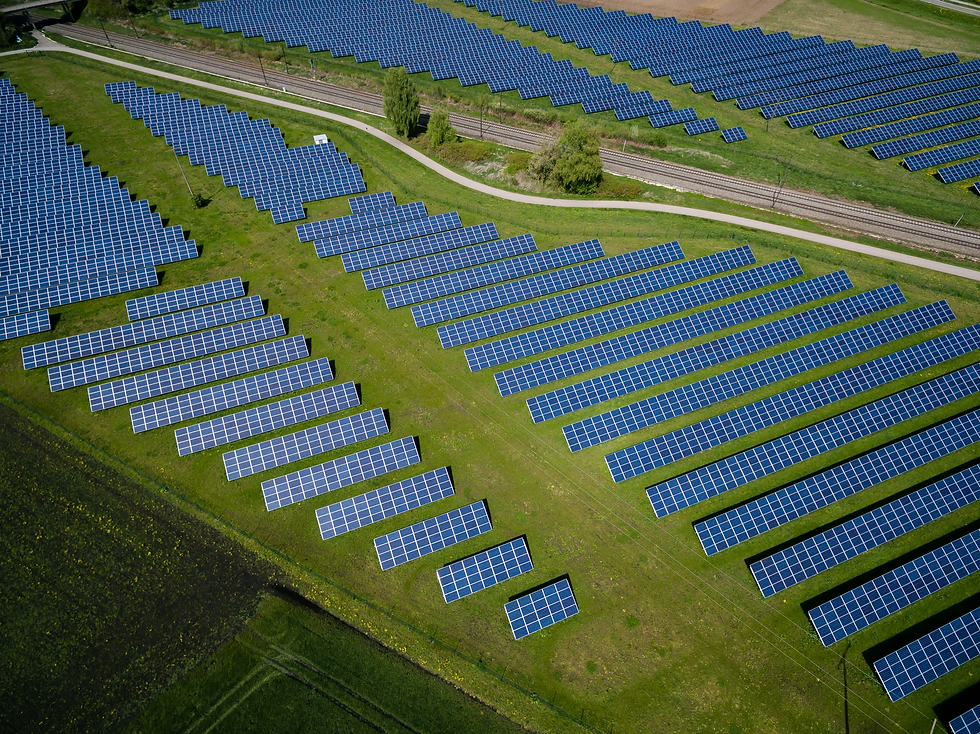
Renewable energy sources include wind, solar, and hydropower. They are sustainable alternatives to fossil fuels. While the initial investment in renewable energy infrastructure is quite substantive, the long-term gain from such upfront costs is far greater.
Case Study: Germany’s Energiewende Program
Germany’s Energiewende program epitomizes potential disposals for entrusting the renewable energy transitions. Emerging in the early 2000s, it has dramatically cut greenhouse gas emissions and created over 300,000 jobs in the renewable energy sector. However, it has also faced challenges, including high implementation costs and occasional energy shortages. Despite these hurdles, the program’s long-term benefits—such as energy security and reduced reliance on fossil fuel imports—highlight its economic viability.
Global Trends
Falling installation costs for renewable technologies further bolster the case for renewables. As reported, since 2010, the cost of solar energy has diminished by 85%, while the cost of wind energy has diminished by 56%, according to the International Renewable Energy Agency (IRENA). These cuts are making renewables increasingly competitive with fossil fuels, cutting energy production costs pretty substantially.

Pollution Taxation and Regulation
Another economically viable solution is introducing taxes and regulations to penalize polluters. Carbon taxes, for example, could incentivize industries to adopt cleaner technologies, while the revenue generated by the states can be reinjected into sustainable initiatives.
Sweden's Case Study: Carbon Tax
The Swedish carbon tax, introduced in 1991, has set the gold standard for pollution taxes. With a price of $137 per ton of CO2 emitted, Sweden has been able to cut its greenhouse gas emissions by 27%, while the country's GDP continued to tread along with steady growth. Its success can be attributed to an ingenious revenue-neutral framework that permits tax cuts in other areas to offset costs to households and businesses.
Economic Results of Pollution Taxing
The report by the International Monetary Fund of 2021 alludes to countries that levy carbon taxes tending to show higher rates of GDP growth than those that did not. For example, between 2010 and 2020, average GDP growth rates of approximately 0.5% were higher in European Union countries with emissions pricing than elsewhere. This indicates a real added bonus: Enforcing pollution taxation can give rise to and enforce beneficial economic change, as well as environmental.
Emerging Technologies and Innovation
Innovative technologies, like carbon capture and storage (CCS) systems, ensure an improvement of the economic viability of the pollution issue. These CCS technologies capture the CO2 emissions being emitted from the industrial sources and then, after some time, store the CO2 as deep underground deposits, well out of the atmosphere. Though costly right now, advances in CCS may ultimately reduce their costs and increase their scalability to be central to any future climate change strategies.
Conclusion
Resilient to the economic costs of pollution is the international collaboration by an existential threat shared by all nations. There is much to underscore that through collective action, agreements such as the Paris Accord must seek to propagate emissions abatement and sustainable development. Government interventions aimed at sustaining the mounting interest in renewable energy sources, put alongside regulatory frameworks that are robust enough to minimize the economic and environmental threat from pollution, will go a long way in meeting this objective.
Of course, pollution comes at a cost for people: hospital admissions, missed school and work days, and a decline in ecosystem vigor. But solutions such as renewable energy with pollution taxes and further technological innovation will position us on a path toward sustainability in the future. Such change will allow governments and industries to create solutions that ensure economic growth along with environmental sustainability and a healthier and prosperous future. The time to act decisively is now, with the costs of inaction far exceeding the investments needed to secure a sustainable future.
Sources
Here are properly formatted citations for the provided sources in APA style:
World Bank. (2016). The cost of air pollution: Strengthening the economic case for action. (Link)
World Health Organization (WHO). (n.d.). Ambient air pollution: Health risks.
(Link)
The Lancet Planetary Health. (2022). The health risks of air pollution. (Link)
International Renewable Energy Agency (IRENA). (2023). Renewable power generation costs in 2022. (Link)
International Monetary Fund (IMF). (1998). Economy-wide effects of air pollution on growth. (Link)
Clean Energy Wire. (n.d.). Easy guide to climate and energy policy. (Link)
European Parliament Research Service (EPRS). (2024). Climate neutrality by 2050: Challenges and opportunities. (Link)
United Nations. (n.d.). UN climate change reports. (Link)
United Nations Environment Programme (UNEP). (n.d.). Climate action topics. (Link)


Comments